
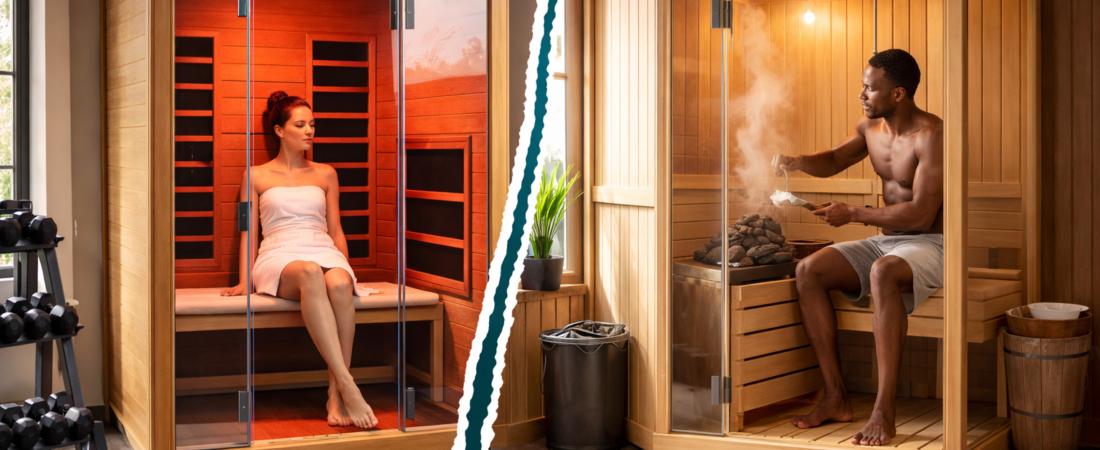
Building a top-tier home gym now means more than just adding dumbbells and squat racks. For biohackers, athletes, and homeowners who value wellness, recovery and daily health routines are just as important as strength training. This is why luxury home saunas and cold plunges are now key features in modern fitness spaces.
Yet one major decision stops many buyers in their tracks: infrared vs. traditional sauna.
Both types offer detoxification, heart health, muscle recovery, and stress relief, but they achieve these benefits in different ways. With high renovation costs, electrical needs, and long-term value to consider, making the wrong choice can be expensive.
This guide covers all the key information you need, without hype or gimmicks, so you can confidently pick the sauna that fits your body, lifestyle, and home gym goals.
Which Sauna Is Right for You?
Answer a few quick questions to find the sauna that best fits your space, recovery goals, and heat tolerance.
Overview: Infrared vs. Traditional Saunas at a Glance
Before diving into specs and pricing, it helps to understand the fundamental difference between these two sauna types.
What Is an Infrared Sauna?
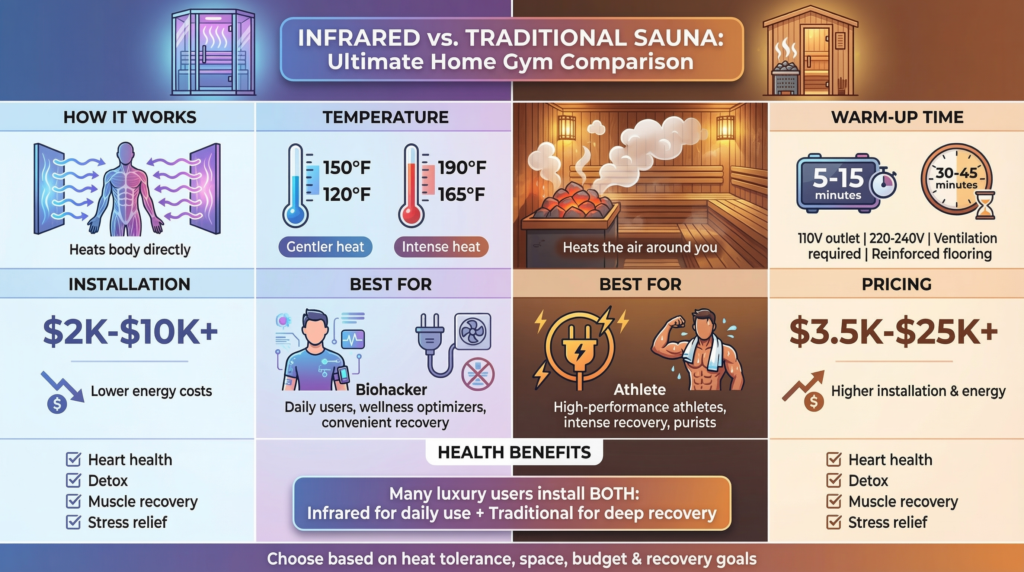
Infrared saunas use infrared light panels to heat your body directly rather than heating the surrounding air. Sessions typically run at lower temperatures (120–150°F) while still inducing a deep sweat.
Key characteristics:
- Lower ambient temperature
- Faster warm-up times
- Plug-and-play electrical requirements
- Often marketed toward biohackers and wellness optimizers
What Is a Traditional Sauna?
Traditional saunas—also called Finnish or dry saunas—use electric heaters or wood-burning stoves to heat rocks, which then warm the air inside the cabin. Typical temperatures range from 160 to 195°F.
Key characteristics:
- High-heat, high-intensity experience
- Steam option (löyly) with water on rocks
- Strong cultural and athletic recovery roots
- Often considered the “gold standard” sauna experience
Feature Comparison: Design, Technology, and Installation
Heat Delivery & Sensation
Infrared Sauna
- Penetrates skin directly using IR wavelengths
- Produces a “gentler” heat sensation
- Easier for heat-sensitive users or longer sessions
Traditional Sauna
- Heats the entire room
- Intense, enveloping heat
- Often preferred by athletes and purists
Verdict: If you enjoy intense heat and sweat fast, traditional wins. If you prefer controlled, tolerable sessions, infrared shines.
Installation & Space Requirements
This is often the deciding factor in whether a home gym project succeeds or fails.
Infrared
- Typically 110V or 120V outlets
- Minimal ventilation requirements
- Works well in bedrooms, basements, or home gyms
- No floor drain needed
Traditional
- Often requires 220–240V electrical
- Strong ventilation recommended
- Heavier units with reinforced flooring
- More complex permitting in some municipalities
Verdict: Infrared is far easier and cheaper to install. Traditional saunas are better suited for dedicated wellness rooms or luxury builds.
Warm-Up Time & Convenience
- Infrared: Ready in 5–15 minutes
- Traditional: 30–45 minutes (sometimes longer)
For busy professionals or daily users, convenience matters.
Verdict: Infrared wins for consistency and ease of use.
Performance Analysis: Health, Recovery, and Longevity
This is where marketing claims can become confusing, especially for buyers investing in high-end home saunas and cold plunges as part of a complete recovery setup.
Cardiovascular & Metabolic Benefits
Both sauna types raise heart rate and mimic moderate cardio activity.
- Traditional saunas have stronger long-term cardiovascular research, especially from Finnish studies.
- Infrared saunas show promising metabolic and circulation benefits, but with less large-scale data.
Winner: Traditional (for evidence depth)
Muscle Recovery & Athletic Performance
Traditional Sauna
- Excellent for post-training recovery
- Encourages circulation and parasympathetic activation
- Popular among endurance athletes and fighters
Infrared Sauna
- Often used for joint stiffness and chronic pain
- Easier to tolerate post-intense workouts
- Can be used more frequently
Winner: Tie. The best choice depends on your heat tolerance and how much you train.
Detoxification & Sweating
Despite marketing claims, “detox” is mostly about sweat and circulation.
- Traditional saunas produce heavier, faster sweat
- Infrared saunas encourage longer sessions and sustained sweating
Winner: Traditional for sweat volume; infrared for session duration
Stress Reduction & Mental Reset
This is a personal choice, but it is important.
Traditional saunas often feel ritualistic and immersive. Infrared saunas feel clinical, efficient, and modern.
Winner: Personal preference
Price Comparison: What Are You Really Paying For?
Price anxiety is one of the most significant barriers when exploring high-end home saunas & cold plunges.
Infrared Sauna Costs
- Entry-level: $2,000–$4,000
- High-end models: $6,000–$10,000+
- Installation: Minimal to none
Traditional Sauna Costs
- Entry-level: $3,500–$6,000
- Custom or luxury builds: $10,000–$25,000+
- Installation: Electrical, ventilation, construction
Operating Costs
- Infrared: Lower energy usage
- Traditional: Higher electricity consumption per session
Verdict: Infrared saunas are easier and less expensive to start with. Traditional saunas cost more at first but often provide a more luxurious experience.
Best for Different Users: Who Should Choose What?
Biohackers & Wellness Optimizers
Best Choice: Infrared Sauna
Why:
- Lower stress on the nervous system
- Easy daily use
- Integrates seamlessly with cold plunge protocols
High-Performance Athletes & Coaches
Best Choice: Traditional Sauna
Why:
- Proven recovery benefits
- High heat tolerance training
- Ideal post-strength or endurance sessions
Affluent Homeowners
Best Choice: Depends on lifestyle
- Infrared for convenience and elegance
- Traditional for an authentic and luxury spa feel
Luxury Real Estate Developers & Designers
Best Choice: Traditional Sauna
Why:
- Strong resale appeal
- Architectural impact
- Pairs well with premium cold plunge installations
Infrared vs. Traditional in a Sauna + Cold Plunge Setup
When building a full recovery suite, high-end home saunas & cold plunges work best together.
- Infrared + cold plunge: gentle contrast, ideal for daily use
- Traditional + cold plunge: intense contrast therapy, elite-level recovery
Many high-end users end up installing both types, using infrared for daily wellness and traditional saunas for deeper recovery sessions.
Final Recommendation: Which Is Better for Your Home Gym?
There is no single ‘best’ sauna. The best choice is the one that fits your needs.
Choose an Infrared Sauna If You:
- Want daily, low-friction sessions
- Have limited space or electrical capacity
- Prefer gentler heat with modern design
- Are pairing with a cold plunge for frequent contrast therapy
👉 Explore top-rated infrared saunas designed for home gyms →
Choose a Traditional Sauna If You:
- Value heat intensity and authenticity
- Train hard and recover harder
- Are building a luxury wellness room
- Want maximum resale and experiential impact
👉 View premium traditional sauna options trusted by athletes →
Still Undecided?
Many high-income buyers exploring high-end home saunas & cold plunges start with infrared, then upgrade to traditional once they understand their heat tolerance and recovery needs.
Bottom Line
Infrared saunas excel in convenience, accessibility, and daily wellness. Traditional saunas dominate in intensity, heritage, and performance recovery. When chosen intentionally, either can transform your home gym into a private sanctuary for longevity and recovery.
The smartest investment is not the most expensive option, but the one you will use regularly.