

Saunas are making a comeback. Recent research suggests that using a sauna, especially the Finnish-style dry sauna, could support heart health, recovery, sleep, and stress relief.
Before diving in, keep in mind that much of the sauna research comes from large Finnish population studies. These studies are observational, so they show connections but not direct cause and effect. Still, when results are similar across studies and the science adds up, it’s worth noting.
Introduction to Sauna Benefits
Sauna bathing has been cherished for centuries as a powerful tool for enhancing overall well-being. Today, the health benefits of regular sauna use are supported by a growing body of research, making sauna sessions a popular addition to modern wellness routines. Whether you’re seeking to boost cardiovascular health, unwind after a long day, or simply enjoy a moment of relaxation, sauna bathing offers a wide range of advantages. In this article, we’ll explore how incorporating regular sauna sessions into your lifestyle can support both your physical and mental health, helping you feel your best every day.
Overview of Sauna Use
Sauna use is all about spending time in a heated environment to encourage sweating, relaxation, and a host of wellness benefits. Traditional Finnish saunas are known for their dry heat, typically generated by burning wood or electric heaters, creating a classic sauna experience. Steam rooms, by contrast, use wet heat to fill the space with humidity, offering a different sensation and set of benefits. Infrared saunas take a modern approach, using infrared light to gently warm the body directly, which many find more comfortable and accessible. Each type of sauna provides unique advantages, allowing you to choose the style that best fits your preferences and wellness goals.
Brief History of Sauna Traditions
The practice of sauna bathing has deep roots in human history, with early forms found in ancient Greece, Rome, and China. However, it is the Finnish tradition that has most strongly shaped the modern sauna experience. In Finland, sauna bathing became a cornerstone of daily life, valued for its ability to promote relaxation, foster social connections, and support overall health. Over time, this tradition has spread across the globe, with cultures everywhere adapting sauna bathing to suit their own customs and needs, making it a truly universal wellness practice.
Quick tools & guides
200 Rule Sauna CalculatorBalance heat + time safely→Sauna Time & Temperature Guide10–30 min, daily use, warning signs→Infrared vs TraditionalChoose the right heat style→Sunlighten 2-person sauna guide
1) Lower risk of cardiovascular death and all-cause mortality
A well-known sauna study tracked middle-aged Finnish men and found that those who used saunas more often had lower risks of sudden cardiac death, fatal coronary heart disease, fatal cardiovascular disease, and death from any cause. These findings suggest the potential health benefits of regular sauna use, as indicated by the study results, which were compared to a control group for accuracy.
Why does this happen? Heat from the sauna raises your heart rate, boosts circulation, and can make your arteries more flexible. These positive effects on cardiovascular health are a bit like doing light or moderate cardio exercise, but without the workout.
2) Help keep blood pressure healthier over time
One long-term study found that people who used saunas more often had a lower chance of developing high blood pressure over time, partly due to improved circulation from regular sauna use.
3) Improves vascular function and circulation
A review in Mayo Clinic Proceedings found that sauna use may help improve how blood vessels work and lower the risk of vascular diseases, including high blood pressure.
Put simply, when your blood vessels function well, blood flows more easily, your heart works less, and your cardiovascular system can become stronger. Sauna sessions raise your core body temperature, which helps dilate blood vessels and further supports improved vascular function.
4) Reduce systemic inflammation markers
A study looking at sauna use and inflammation found a link between how often people used saunas and their levels of C-reactive protein (CRP), which is a common marker for inflammation.
5) Support muscle recovery and reduce soreness
Heat therapy, including sauna use, has been studied for helping with recovery, soreness, and muscle relaxation. One controlled study found that using a sauna helped reduce pain and improve muscle function after exercise. Larger reviews and meta-analyses also show that both heat and cold therapies can help ease sore muscles after an intense workout. Incorporating sauna sessions into your workout routine can support muscle recovery and reduce soreness, making it easier to maintain a consistent and effective fitness regimen.
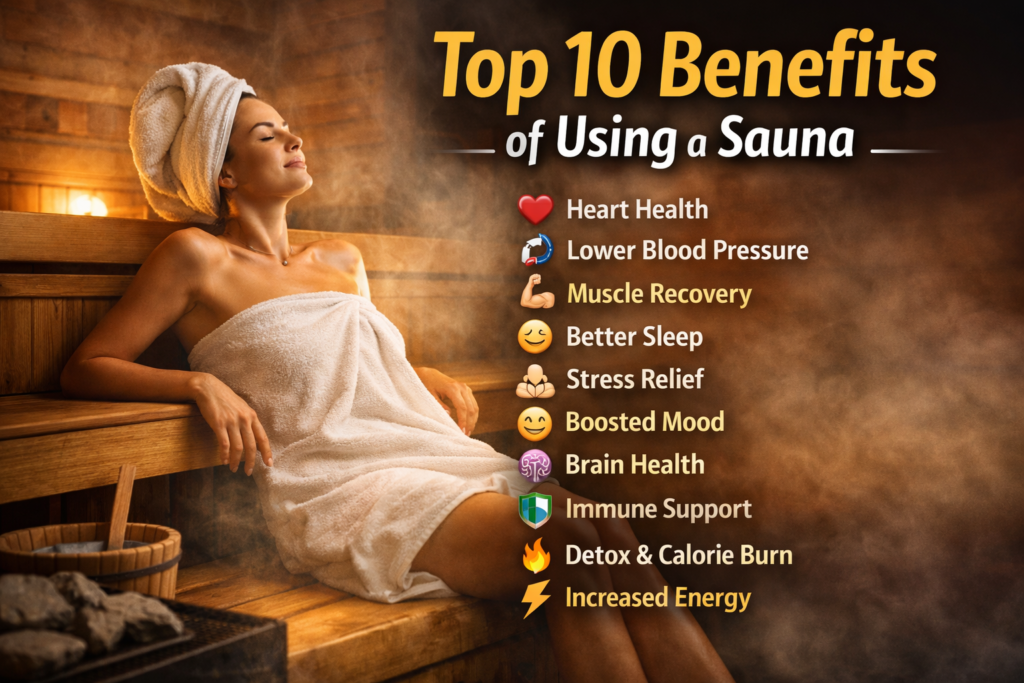
Top 10 Sauna Benefits (At a Glance)
Short on time? Here’s the quick list. Tap any benefit to jump to that section.
Benefits snapshot
-
Heart healthCardio-like heat response
-
Blood pressure supportLong-term trends
-
CirculationVascular function
-
RecoverySoreness & training support
-
Better sleepHeat → cooldown rhythm
-
Stress reliefRelaxation response
-
Mood supportHeat therapy signals
-
Immune resilienceRespiratory associations
-
Heat adaptationTolerance over time
-
Energy & focusPost-sauna “reset”
6) Improve sleep quality
In the Global Sauna Survey, many people said they slept better for one or two nights after using a sauna.
Why does this help? The heat from the sauna raises your core body temperature, and cooling down afterward may mimic the body’s natural drop in core body temperature at night, which signals it’s time to sleep. Still, results can vary from person to person.
7) Reduce stress and promote relaxation
In the same survey, most people said they used saunas to relax and reduce stress.
8) Support mood and depressive symptoms
Clinical research on whole-body hyperthermia, which is a controlled heat treatment, has shown antidepressant effects compared to a fake treatment in a randomized clinical trial.
9) Linked to lower dementia/Alzheimer’s risk
A well-known long-term study found that men in Finland who used saunas more often had lower risks of dementia and Alzheimer’s disease.
Trusted reviews also point out a key limitation: these findings are observational and come from a specific cultural group, so they do not prove that sauna use prevents dementia and Alzheimer’s disease.
10) Linked to fewer respiratory infections like pneumonia
Research has also found that middle-aged men who use saunas more often have a lower risk of respiratory problems, including pneumonia. Sauna use can support overall respiratory health and may benefit individuals with conditions like chronic obstructive pulmonary disease by improving lung function and reducing respiratory symptoms. Improved exercise tolerance has also been observed in people with respiratory conditions who use saunas, indicating enhanced physical endurance and better functional capacity.
How to actually use a sauna to get these benefits (without burning out)
If you want a simple sauna routine that most people can follow or are interested in a cold plunge routine for beginners:
Research shows that repeated sauna sessions and how regular sauna use can maximize health outcomes, including improved cardiovascular health, stress reduction, and enhanced recovery. For best results, regular dry sauna bathing is recommended, as it has been linked to benefits like muscle recovery, pain relief, and overall wellness.
Beginner protocol (2 weeks)
- 2–3 sessions/week
- 10–15 minutes per session
- Exit earlier if you feel lightheaded.
- Cool down gradually, rehydrate
Standard “habit” protocol
- 3–4 sessions/week
- 15–20 minutes
- Focus on consistency over intensity.
This approach matches how most studies define ‘frequent sauna use’ and keeps things practical rather than extreme.
Sauna safety
Most people can use saunas safely, but there are some risks. Prolonged exposure to high heat can increase the risk of heat stress or heat-related illnesses, especially for vulnerable individuals. The main issues are dehydration, low blood pressure after leaving the sauna, and overheating, especially if you are sick, hungover, or taking certain medications.
Safety basics
- Hydrate before and after
- Avoid alcohol + sauna.
- Don’t “push through” dizziness.
- Keep first sessions shorter to avoid prolonged exposure and reduce the risk of heat stress.
- Follow safety tips to ensure a safe and enjoyable experience.
- Not everyone can tolerate sauna sessions, particularly those with certain health conditions or temperature sensitivity.
- If you have cardiovascular disease, uncontrolled blood pressure, are pregnant, have respiratory issues, or other medical concerns, consult a healthcare professional before starting a sauna routine.
A clinical review also highlights the benefits but stresses the need for better research and careful attention to potential side effects.
Quick FAQ
Is sauna better than exercise? No. Sauna can have some similar effects on the heart, but it does not replace strength training or cardio exercise.
How long should you stay in the sauna? Most people feel good after 10 to 20 minutes in the sauna, depending on the temperature, their experience, and how well hydrated they are. Staying longer is not always better.
Is an infrared sauna included in these benefits? Some research includes both Finnish-style and infrared dry saunas, but many of the major population studies focus on Finnish sauna use.
How do ice baths compare to sauna use for recovery? Ice baths and saunas are both popular for post-exercise recovery, but they work differently. Ice baths use cold exposure to reduce muscle soreness, inflammation, and can help boost mood after intense workouts. Saunas use heat to relax muscles, improve circulation, and promote recovery. Some people alternate between both methods for enhanced benefits.
What is the difference between a steam room and a sauna?A steam room uses high humidity and moist heat, while a sauna provides dry heat with low humidity. Steam rooms are often preferred for respiratory health and skin hydration, whereas saunas are known for deep muscle relaxation and cardiovascular benefits.
Does sauna use help you lose weight? Sauna sessions can cause temporary weight loss due to sweating, but this is mostly water weight, not body fat. Once you rehydrate, the lost water weight returns. While some studies suggest sauna use may slightly increase calorie burn, there is limited evidence that it leads to significant long-term weight loss or fat reduction.
Does sauna use support the immune system? Yes, regular sauna use may support the immune system by stimulating immune cell production and improving circulation. Some research suggests sauna bathing can help reduce the risk of common illnesses, providing immune system support as part of a balanced wellness routine.
What are other health benefits of sauna use? Beyond relaxation and muscle recovery, sauna use may improve circulation, promote skin rejuvenation (especially with red-light therapy), support cardiovascular health, and help with stress reduction. These other health benefits make sauna a valuable addition to a wellness routine.