

Quick Answer (TL;DR)
The 200 rule for saunas is an easy way to balance how hot your sauna is with how long you stay inside.
In short:
Add the sauna temperature in Fahrenheit to the number of minutes you spend inside. The total should be about 200.
Common examples include:
- 160°F for 40 minutes
- 170°F for 30 minutes
- 180°F for 20 minutes
The idea is to get steady heat exposure without risking overheating, dehydration, or feeling too tired afterward.
Why the 200 Rule for Saunas Is Often Asked About
If you’ve looked into sauna health benefits or thought about getting a home sauna, you’ve probably seen people ask, “what is the 200 rule for saunas?” in articles or online forums.
The rule exists because sauna advice can be confusing. People often get mixed messages about the best temperature, how long to stay in, and how often to use a sauna. It gets even more confusing when comparing traditional and infrared saunas or trying to balance safety with performance and recovery.
The 200 rule makes these choices easier by giving you a simple guideline to follow. It’s also one of several important safety tips that help sauna users avoid heat-related issues and enjoy a safer experience.
How the 200 Rule for Saunas Works
The 200 rule is best understood as a way to manage total heat stress. Much like exercise programs balance intensity and duration, sauna sessions can be adjusted by trading higher temperatures for shorter exposure times, or lower temperatures for longer sessions.
Instead of guessing about temperature or time, this rule gives you a clear target that helps your body respond in a predictable way. The 200 rule also helps manage increases in core body temperature, which is important for both safety and maximizing sauna benefits.
Key Characteristics of the 200 Rule
Designed for Traditional Saunas
The 200 rule is mainly for traditional Finnish saunas, which usually run between 160°F and 200°F and use heated air and sauna stones. These are also known as dry saunas, as they provide dry heat with low humidity. In contrast, wet heat environments like steam rooms use high humidity instead of dry air, creating a different experience and set of health benefits.
Infrared saunas work differently. They use lower temperatures and radiant heat, so sessions are usually longer. Because of this, the 200 rule doesn’t really apply to infrared saunas. Different Experience Levels
One good thing about the 200 rule is that it’s flexible. Beginners can use lower heat for longer, while experienced users might choose higher heat for less time. This makes the rule useful for everyone, from homeowners to athletes.
Encourages Safer, Sustainable Use
Excessive heat exposure. Too much heat can cause dehydration, dizziness, and slow recovery. Excessive heat exposure can also lead to low blood pressure, which is another reason to follow the 200 rule. The 200 rule helps you avoid these problems by promoting moderation and steady habits instead of pushing for extreme heat or extended sessions.na Examples
Home Sauna Use
Someone with a home sauna might set it to 170–175°F and stay in for 25 to 30 minutes. Incorporating sauna sessions into your workout routine can support muscle recovery and relaxation. This way, you get relaxation and better circulation without feeling too tired, so it’s easier to keep up a regular routine.
Athletic Recovery Sessions
Athletes often use saunas to recover after training. Using a sauna after an intense workout can help soothe sore muscles and promote muscle relaxation, aiding in overall recovery. They might choose higher temperatures, like 180°F, but only stay in for about 20 minutes. This helps their heart and muscles recover without extra strain.
Longevity and Wellness People who want to manage stress or focus on long-term health might pick lower temperatures, like 160°F, and stay in for 35 to 40 minutes. This approach is relaxing, helps your body adapt, and is easy to stick with.
Regular sauna sessions have been linked to increased longevity and a reduced risk of cardiovascular disease. Regular sauna use offers wellness benefits such as improved sleep quality and stress management.
Benefits of Following the 200 Rule
Consistency Without Guesswork
Having a simple rule makes sauna sessions more predictable and easier to repeat. Being consistent is key for long-term benefits. How regular sauna use—such as following the 200 rule (aiming for 200 minutes of sauna exposure per week)—supports ongoing health improvements by maximizing positive effects on heart health, stress reduction, and overall wellness, as shown in scientific studies.
Reduced Risk of Overuse
By avoiding extreme heat or long sessions, the 200 rule lowers your chances of getting dehydrated, overheated, or feeling wiped out afterward. This is especially important for individuals with high blood pressure, as following the 200 rule helps avoid excessive strain and supports safer sauna benefits.
Better Long-Term Use of a Sauna Investment
For homeowners who invest in high-end saunas, consistent and comfortable use delivers far more value than infrequent, overly intense sessions.
Regular sauna sessions not only protect your investment but also support your overall health by enhancing cardiovascular function, boosting immune response, and promoting mental and physical well-being.
Traditional vs. Infrared Saunas and the 200 Rule
Knowing what type of sauna you have is essential when discussing the 200 rule.
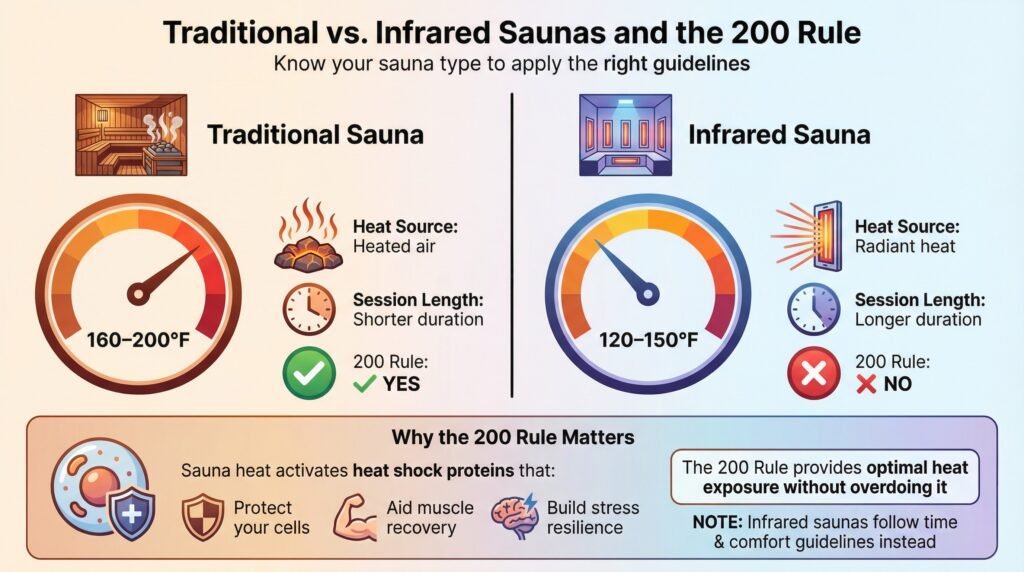
Infrared saunas usually follow guidelines based on time and comfort, not a formula that combines temperature and time. This is because infrared saunas use infrared light to directly raise both skin temperature and body temperature, activating thermoregulatory pathways differently than traditional saunas.
Heat from the sauna activates heat shock proteins, which help protect your cells, aid muscle recovery, and build stress resilience. The 200 rule gives you enough heat to trigger these benefits without overdoing it..
Sauna and Cold Exposure Combinations
Some experienced people like to pair sauna sessions with cold exposure. In fact, some people alternate sauna sessions with ice baths to enhance recovery and overall well-being. Usually, they follow the 200 rule in the sauna, then take a quick cold plunge or shower. If you’re new, it’s best to get used to the sauna first before trying both.h.
Sauna Etiquette
Practicing good sauna etiquette is key to ensuring a safe and enjoyable experience for everyone. Whether you’re new to sauna bathing or a seasoned regular, following a few simple guidelines can help you and others maximize the health benefits of sauna use.
Before entering the sauna, always shower to keep the environment clean and hygienic. Wear minimal clothing—such as a towel or swimsuit—and be sure to sit on a towel to protect the benches and maintain cleanliness. While inside, keep conversations quiet and avoid using electronic devices, allowing everyone to relax and enjoy the benefits of sauna bathing in peace.
Start with shorter sauna sessions, especially if you’re new, and gradually increase your time as your body adapts to the heat. After your session, cool down slowly and rehydrate with water to support your body’s recovery and prevent dehydration. By respecting these simple etiquette rules, you’ll help create a welcoming atmosphere and ensure that everyone can enjoy all the benefits of sauna bathing in a safe and comfortable setting.
Sauna Use and Immune System
Regular sauna use is more than just a relaxing ritual—it can also provide powerful support for your immune system. The heat from sauna bathing stimulates your body to produce more white blood cells, which play a crucial role in fighting off infections and keeping you healthy. Sauna therapy also boosts the production of antibodies, helping your body neutralize harmful pathogens more effectively.
Sweating during sauna sessions helps flush out toxins, reducing the burden on your immune system and supporting overall wellness. Research has shown that people who practice regular sauna bathing may experience fewer colds and other common illnesses, making sauna use a valuable addition to your self-care routine. By incorporating regular sauna sessions into your lifestyle, you can help strengthen your immune system and enjoy greater resilience against everyday health challenges.
Sauna Use and Dementia
Emerging research suggests that regular sauna bathing may offer protective benefits for brain health, particularly when it comes to dementia and Alzheimer’s disease. Studies have found that men who use a sauna several times a week have a lower risk of developing dementia and Alzheimer’s disease compared to those who sauna less frequently. While the exact reasons are still being explored, it’s believed that the heat stress from sauna use can improve cardiovascular health and reduce inflammation—both important factors in maintaining cognitive function.
Beyond the physical effects, sauna sessions also promote relaxation and stress relief, which are essential for mental health and overall well-being. By making regular sauna use part of your wellness routine, you may be supporting not only your heart and body, but also your mind—potentially lowering your risk of cognitive decline and enhancing your quality of life as you age.
Installation, Cost, and Long-Term Value Considerations
For people who invest in high-end saunas, it’s not just about comfort. Repeated sauna sessions over time help maximize the value and health benefits of your investment. Using moderate heat and session times helps your sauna last longer, uses less energy, and makes it easier to use often, which adds long-term value.
Frequently Asked Questions
What is the 200 rule for saunas in simple terms?
It’s a simple rule: add the sauna temperature in Fahrenheit to the minutes you spend inside, and the total should be about 200. This guideline helps ensure you are using a sauna safely and effectively, maximizing sauna benefits such as improved respiratory health, pain relief, cardiovascular health, mental well-being, and muscle recovery, especially after workouts. The 200 rule is a simple guideline for using a sauna safely and effectively.
Is the 200 rule scientifically proven?
The rule isn’t a medical requirement, but it matches common safety guidelines for heat exposure in traditional saunas. Many scientific studies investigating sauna benefits use a control group to compare outcomes, helping to establish the positive effects of sauna use on cardiovascular health, blood pressure, and overall physical well-being.
Scientific studies often use a control group to compare the positive effects of sauna use with those who do not use saunas.
Can beginners use the 200 rule?
Yes, beginners can use the rule. Start with lower temperatures and slowly increase the heat or time as you get used to it. It’s important to pay attention to how well you tolerate sauna sessions, as some individuals may be more sensitive to heat. Adjust your sauna use based on your comfort level and consult a healthcare provider if you have concerns.
Does the 200 rule apply to infrared saunas?
No. Infrared saunas use lower temperatures and work differently, so they need their own set of guidelines.
Some people choose infrared saunas for additional benefits like skin rejuvenation.
Should advanced users exceed the 200 rule?
Some experienced users go beyond the rule, but doing this often can lead to dehydration and tiredness. While sauna use is known for benefits like pain relief, muscle recovery, chronic pain management, and immune system support, exceeding recommended limits can increase risks. Sticking to a steady routine is usually better than pushing for extremes.
Final Thoughts
So, what is the 200 rule for saunas? So, what does the 200 rule for saunas mean? It’s a guideline to balance heat and time in a traditional sauna. By removing guesswork and promoting moderation, the rule helps users stay consistent, recover effectively, and enjoy the benefits of sauna use without unnecessary risk.
Regular sauna use is associated with improved circulation, better blood flow, and positive effects on blood vessels, heart health, and reduced risk of cardiovascular disease, heart disease, and sudden cardiac death. Research also links sauna use to a lower risk of dementia and Alzheimer’s disease, improved exercise tolerance, and a range of other health benefits. While sauna sessions may cause temporary weight loss due to water weight, they are not a proven method to lose weight or reduce body fat.
For most people, regular, sensible sauna sessions are better than pushing for extreme heat.