

At first glance, using a sauna seems simple: you sit in the heat, sweat, and then leave. However, the length of your session, the temperature, and how often you go all have a big impact on how your body reacts.
Too short, and you may barely trigger any meaningful adaptation.
Too long, and you risk dehydration, dizziness, poor recovery, or feeling worse the next day.
This guide explains sauna timing, temperature, and daily use in a practical, science-based way. The goal is to help you get the benefits without overdoing it.
Why Sauna Time Matters
Sauna exposure works through heat stress. Your body responds by:
- Raising heart rate
- Increasing circulation to the skin
- Activating sweat glands
- Triggering a recovery response after you cool down
The key insight many people miss is this:
The benefits don’t come from staying in longer. They come from using the right amount of heat on a regular basis.
In this way, sauna use is similar to exercise. Doing more is not always better. The aim is to create enough heat stress to help your body adapt, but not so much that it becomes too much for you.
Short vs Moderate vs Long Sauna Sessions
What 10 Minutes in a Sauna Does for You
A 10-minute session is considered short, but it is still useful, especially for beginners.
What’s happening at ~10 minutes:
- Core temperature begins to rise
- Heart rate increases modestly
- Light to moderate sweating begins
- The nervous system starts shifting toward relaxation
Best for:
- Beginners building heat tolerance
- Stress relief and mental reset
- Quick recovery on busy days
- People sensitive to heat
What to expect:
- You’ll feel warmer and calmer
- Benefits are subtle but real
- Minimal dehydration risk if hydrated
For many people, doing 10 minutes regularly is better than doing 30 minutes only once in a while.
What 20 Minutes in the Sauna Does
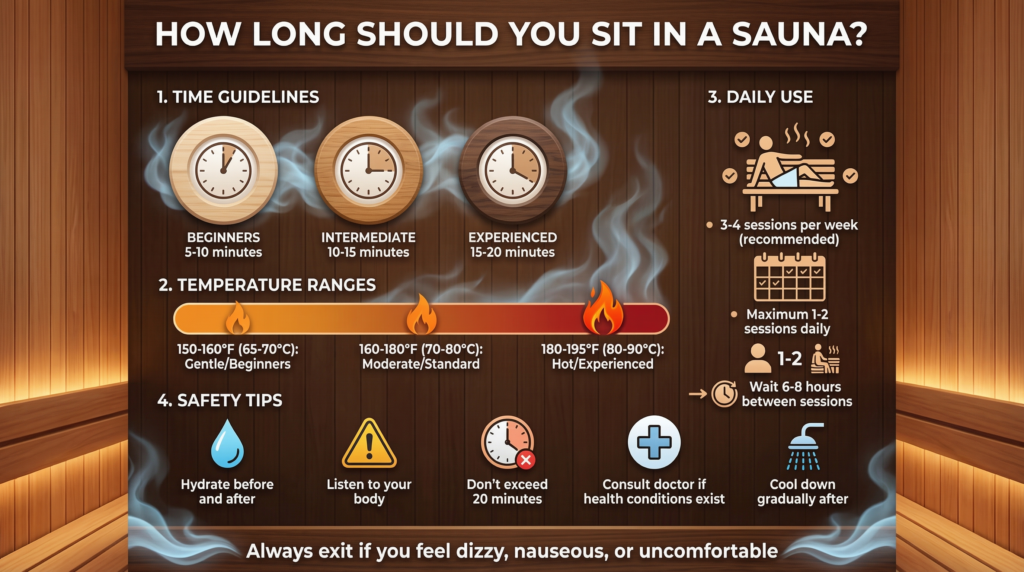
For most healthy adults, sauna sessions of about 15 to 20 minutes start to have a real effect on the body.
What’s happening at ~20 minutes:
- Sustained elevation in heart rate
- Significant sweating
- Strong circulatory response
- More noticeable post-sauna relaxation
Best for:
- Cardiovascular and circulation support
- Muscle relaxation and recovery
- Sleep quality (if timed correctly)
- People with some sauna experience
What to expect:
- Deep relaxation afterward
- A strong “reset” feeling
- Increased need for hydration
For many people, 20 minutes is the sweet spot—long enough to matter, short enough to recover from easily.
What About 30+ Minutes in a Sauna?
Sessions that last longer than 30 minutes are usually for advanced users or special situations.
What’s happening at 30+ minutes:
- High sweat and fluid loss
- Increased strain on circulation
- Greater risk of dizziness or nausea
- Diminishing returns for many people
Best for:
- Very experienced sauna users
- Lower temperatures split into rounds
- Cultural or traditional sauna practices
Potential downsides:
- Dehydration
- Headaches
- Poor sleep if done late
- Feeling “wiped out” the next day
Longer sessions are not needed for most health benefits and can actually have negative effects if done too often.
Ideal Sauna Duration for Different Goals
For Relaxation & Stress Relief
- 10–15 minutes
- Low to medium heat
- Calm breathing, no pushing
This approach works well if you want to relax, lower stress, or clear your mind.
For Recovery & Muscle Relaxation
- 15–20 minutes
- Medium heat
- Especially effective after workouts if you hydrate
This helps your circulation and relaxation without making recovery harder.
For General Health & Longevity Habits
- 15–20 minutes
- 2–4 times per week
- Focus on consistency, not extremes
This matches how sauna is used in long-term wellness habits.
Daily Sauna Use: Benefits & Risks
What Happens If You Sauna Every Day?
Daily sauna use can be safe for many healthy people, but only if the sessions are kept moderate.
Potential benefits of daily sauna:
- Improved relaxation habits
- Better sleep consistency
- Faster mental recovery from stress
- A reliable wellness routine anchor
Potential risks of daily sauna:
- Chronic dehydration
- Electrolyte imbalance
- Feeling fatigued instead of refreshed
- Poor workout recovery if overdone
Is It Safe to Sauna Daily?
For most healthy adults:
- Yes, if sessions are short to moderate (10–20 minutes)
- No, if every session is long, very hot, or treated like endurance training
An innovative approach is cycling intensity:
- Light days: 10–12 minutes
- Moderate days: 15–20 minutes
- Rest days: skip or go very gently
Detox Claims Explained
How Long Do You Have to Sit in a Sauna to Detox Your Body?
People ask this question all the time, and the honest answer is:
There is no specific sauna time that “detoxes” your body.
Here’s why:
- Your liver and kidneys handle detoxification
- Sweat’s primary role is cooling, not toxin removal
- Only trace amounts of certain substances appear in sweat
Sauna may support health indirectly by:
- Improving circulation
- Reducing stress
- Supporting sleep and recovery
However, spending more time in the sauna does not necessarily mean you will detox more.
Calories & Metabolism: What Actually Happens
Can You Burn 600 Calories in a Sauna?
This is one of the most common myths about saunas.
Reality:
- Sauna does increase heart rate
- Your body uses energy to regulate heat
- But calorie burn varies widely and is far lower than most claims
Most of the weight lost after a sauna session is:
- Water weight, not fat
Does Sauna Boost Metabolism?
Sauna may:
- Slightly increase energy expenditure in the short term
- Support better training recovery
- Improve sleep, which affects metabolism indirectly
But sauna is not a fat-loss replacement for movement or nutrition.
Think of sauna as something that supports your healthy routine, not as a way to burn lots of calories.
Best Sauna Temperatures by Type
Traditional (Finnish-Style) Sauna
- 150–195°F (65–90°C)
- Shorter sessions
- Intense dry heat
If you are new to saunas, it is best to start at 150 to 160°F.
Infrared Sauna
- 120–150°F (50–65°C)
- Longer sessions feel easier
- Heat penetrates more gradually
Many people find it easier to stay in an infrared sauna for 20 to 30 minutes.
Steam Room (for comparison)
- 110–120°F, very high humidity
- It feels hotter than the temperature numbers might suggest.
- Shorter sessions recommended
Warning Signs You’re Staying Too Long
End your session immediately if you notice:
- Dizziness or lightheadedness
- Nausea
- Headache
- Confusion or tunnel vision
- Heart pounding uncomfortably
Feeling calm and warm afterward is normal.
Feeling wrecked or ill is a sign you overshot your dose.
Quick Guidelines for Safe, Effective Sauna Use
Use these as a simple baseline:
- Start with 10–15 minutes
- Work up to 15–20 minutes if you feel good
- Keep the heat moderate, especially early on
- Hydrate before and after
- Don’t chase sweat as a goal
- Stop before discomfort turns into distress
- Consistency beats intensity
The Bottom Line
There’s no single “perfect” sauna time—but for most people:
15–20 minutes at a comfortable heat, done consistently, delivers the best balance of benefit and recovery.
If you finish your session feeling calm, clear-headed, and refreshed, you did it right. If you finish feeling drained or sick, scale it back.
Sauna is most helpful when it fits into your life and does not become another source of stress.