The #1 reason cold plunges “don’t work” isn’t the tub, the temperature, or your willpower.
The real problem is using the wrong approach: starting with water that’s too cold, staying in for too long, and missing the most important steps—focusing on steady breathing and warming up properly afterward.
Cold water immersion causes a cold shock response, which means your breathing, heart rate, and blood pressure all rise quickly. If you treat cold plunges like a test of toughness, you might end up feeling terrible afterward or even give up completely.
This guide gives you a beginner-safe routine you can repeat, progress, and actually enjoy.
Safety note: If you have cardiovascular disease, uncontrolled hypertension, Raynaud’s, prior cold injury, or similar conditions, get medical clearance before doing true cold plunges. ACSM lists several contraindications and cautions for cold-water immersion.
How long should you do a cold plunge? (simple ranges)
Most beginners do best when they start shorter than they think they can.
Beginner range (best starting point):
- 30–60 seconds (learn calm breathing, build confidence)
- Progress to 1–2 minutes once you can control your breath quickly
Standard “regular user” range:
- 2–3 minutes (if you’re adapted and recovering well)
Upper end (not necessary for most people):
- 3–5 minutes (advanced users only; not automatically better)
A helpful rule:
If you can’t get your breathing under control within the first 15–30 seconds, your plunge is too intense today (either too cold or too long).
What specific time targets do
What do 30 seconds of cold water do?
Thirty seconds is the best training tool for beginners because it targets the hardest part: the initial shock.
It helps you practice:
- Controlled breathing
- Calm entry
- Not panicking when your body screams “nope.”
What does a 2-minute cold plunge do?
Around 2 minutes is where many people feel the “reset”:
- Less perceived soreness
- A calmer mood afterward
- That energized “clean” feeling
(Especially if you rewarm correctly.)
What does a 3-minute ice bath do?
3 minutes is mainly a tolerance/progression marker:
- You’re staying calm longer
- You’re better adapted to discomfort
- You may feel more pronounced mood/recovery effects
But it’s still not a badge of honor. If 3 minutes worsens your sleep or leaves you feeling drained later, 2 minutes is the better routine.
How cold should your cold plunge be?
The most important thing is that a cold plunge should feel cold but manageable. It should not make you feel numb, out of control, or unsafe.
AHA and other safety guidance emphasize cold shock’s rapid impact on breathing and cardiovascular strain, especially with sudden exposure.
Beginner-friendly temperature zone:
- 50–59°F (10–15°C) is a common “effective but manageable” range for many people (especially for routine-building).
What’s the coldest you should do a cold plunge?
If you’re new, avoid ultra-cold temps. The “coldest you should do” is the coldest you can handle while staying calm and safe:
- Breathing controlled quickly
- No numbness
- No loss of dexterity
- No prolonged shivering afterward
Signs it’s too cold for you
If you notice any of these, warm it up or shorten it:
- Numbness in hands/feet
- Loss of control (can’t slow your breathing)
- Clumsiness or weak grip
- Afterdrop: you feel okay at first, then get intensely cold later (delayed chill)
Cold-water shock can raise your blood pressure and strain your heart. It’s not something you should try to push through without caution.
The 1–10–1 rule explained (and how to adapt it)
You’ll hear the “1–10–1 rule” described as:
- 1 minute to get breathing under control
- 10 minutes of meaningful movement
- 1 hour before unconsciousness from hypothermia
This framework is mainly used for unexpected cold-water immersion safety, not “optimized wellness plunging.”
Some cold-water safety experts also warn that these timelines can be oversimplified or misleading if treated like guarantees.
How to use 1–10–1 for your plunge routine
Use just the most useful part:
- The “1 minute” rule = breathing control is the priority.
If you can’t calm your breathing quickly, change the protocol (temp/time/entry).
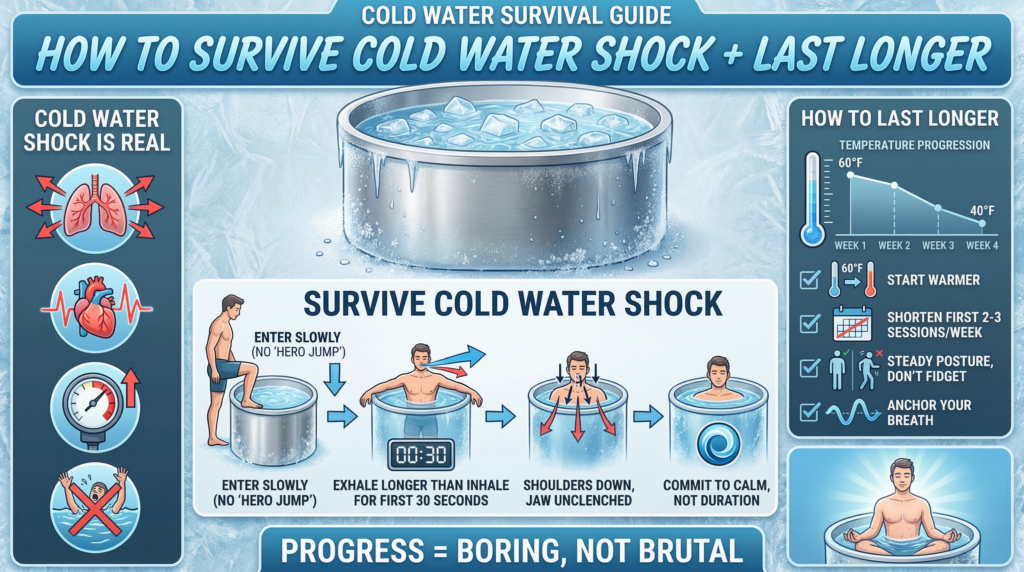
How to survive cold water shock + last longer
Cold water shock is real: rapid breathing, elevated heart rate, elevated blood pressure, and increased drowning risk if you gasp with your face submerged.
How to survive cold water shock (the safe, simple approach)
- Enter slowly (no “hero jump”)
- Exhale longer than you inhale for the first 30 seconds
- Shoulders down, jaw unclenched (tension makes breathing worse)
- Commit to calm, not duration
How to last longer in a cold plunge
If you want longer sessions, don’t “try harder.” Instead:
- Start warmer (then progress down over weeks)
- Shorten the first 2–3 sessions of the week
- Keep a steady posture and try not to fidget, since moving around can make the cold feel even more uncomfortable.
- Anchor your breath (slow, consistent exhales)
Progress happens when the plunge feels boring—not brutal.
Best time of day to cold plunge
What is the best time for an ice bath?
It depends on what you want from it:
Morning / early day (often best for beginners)
- Most people find it energizing
- It can feel like a clean “start button”
Evening
- Some people sleep great afterward
- Others feel wired and sleep worse (especially if the plunge is too intense)
Rule: If sleep quality drops, move plunging earlier or shorten the session.
Head dunking: yes or no?
Do you dunk your head in a cold plunge?
For beginners: usually no.
Cold shock can cause you to gasp without meaning to, which is a safety risk when your face is in the water, especially if you haven’t learned to control your breathing yet.
Safer alternatives
- Splash face with cold water first
- Brief face dip while seated (no breath-holding, no “challenge” mindset)
- Build tolerance over time
Common cold plunge mistakes
These are the mistakes that make people say, “Cold plunges don’t work for me.”
- Too long, too soon
- Too cold, too soon
- Inconsistent routine (you never adapt)
- Poor rewarming (you feel awful later)
- Chasing pain instead of chasing consistency
If you use cold plunges mainly for recovery, keep in mind that research reviews in exercise settings often show cold-water immersion can help reduce soreness and improve recovery, especially when you follow a reasonable and consistent routine.
What NOT to do after a cold plunge
This is where most people sabotage the benefits.
Don’t:
- Sit still in wet clothes
- Go straight into a freezing room and stay there
- Stack extreme cold + exhaustion + lots of caffeine
- Treat numbness as “progress”
If you feel chest pain, severe dizziness, confusion, or you can’t warm up again, stop right away and get medical help. Cold water immersion can stress your heart and quickly change your breathing and blood pressure.
Post-plunge recovery: what to eat + how to rewarm
How to rewarm (the part that makes you feel amazing later)
- Towel dry immediately
- Move lightly for 5–10 minutes (walk, light bodyweight movements)
- Warm clothes
- Warm drink if desired
The goal: feel comfortably warm again within ~30 minutes.
What should you eat after a cold plunge?
Keep it simple:
- A typical balanced meal is fine (protein + carbs + fluids)
- If you do a cold plunge without eating first and feel shaky afterward, this is normal. Just eat a regular meal.
There’s no magic food. The “win” is nervous system regulation + consistency.
The simple “Perfect Routine” summary
- Temperature: start 50–59°F, go warmer if you panic-breathe
- Time: 45–120 seconds (progress to 2–3 minutes when calm)
- Frequency: 2–4x/week (more only if sleep/recovery stay strong)
- Non-negotiable: calm breathing + rewarm properly
- Avoid dunking your head early on, trying to push through numbness, or skipping the warm-up steps after your plunge.