
You’ve set up a home cold plunge, but are you getting all the benefits? Maybe you’re regularly braving the cold, but it still feels like something is missing, something that could make your routine more rewarding.
As you stand there shivering and try to convince yourself to get in again tomorrow, you might start to wonder if you’re doing it right. Everyone else seems to post about their cold plunge sessions and claim amazing results, but when you’re actually doing it, the benefits can feel out of reach.
There’s a big difference between just getting into cold water and using cold therapy to target specific health goals. Many people miss out on the real benefits here, and that’s often where frustration starts.
Here’s what I’ve learned about getting the most out of your home cold plunge. These practical techniques can really help with recovery, metabolism, mental clarity, and overall wellness.
Understanding the Physiological Mechanisms Behind Cold Exposure
To understand what happens in your body during a cold plunge, it helps to know the basic physiological effects. It’s not just about toughing it out or showing you can handle discomfort.
Certain biological processes start when you reach specific temperatures and stay in the cold for a set amount of time.
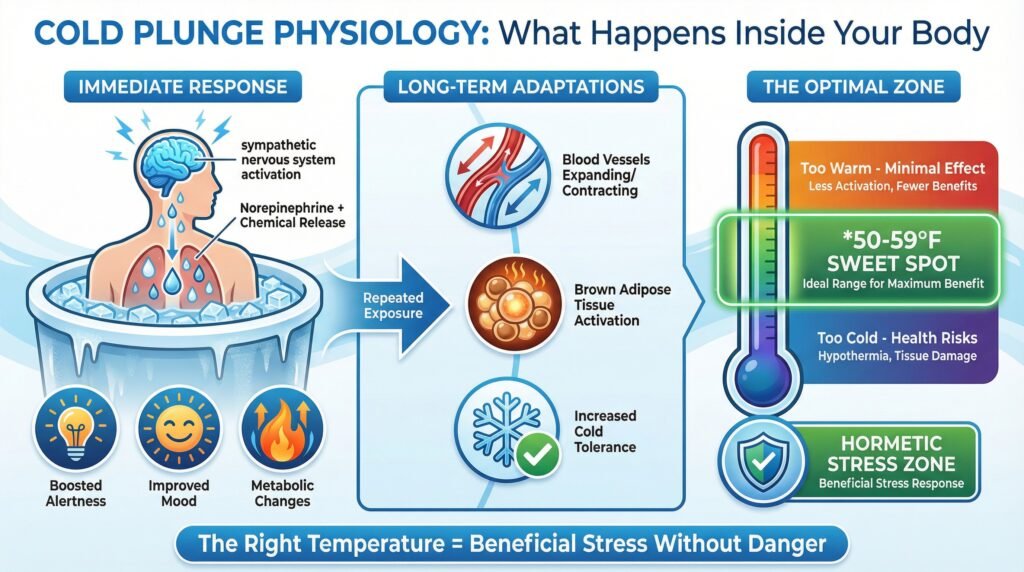
When your skin temperature drops quickly, your body starts a stress response. Your sympathetic nervous system kicks in, releasing norepinephrine and other chemicals into your bloodstream.
This does more than just give you an adrenaline rush.
You’re setting off a biological response that boosts alertness, improves mood, and starts metabolic changes that last even after you’ve warmed up.
The real benefits come with repeated exposure. Your body starts to adapt to cold stress over time.
Your blood vessels get better at tightening and relaxing.
Your brown adipose tissue, the metabolically active fat that generates heat, increases in activity and potentially in volume. Your subjective tolerance to cold improves dramatically.
Many people miss this key point: these changes only happen if you use cold stress within a certain range. If it’s not cold enough, you’re just taking an uncomfortable bath with little effect.
If it’s too cold, you can trigger too much stress, which can hurt your recovery and even cause health problems.
The temperature range that consistently produces beneficial adaptations without excessive stress sits between 50 and 59 degrees Fahrenheit. Within this range, you’re cold enough to trigger the hormetic stress response, essentially a useful stressor that makes your body stronger, without pushing into dangerous hypothermia territory or creating such intense discomfort that you can’t maintain proper breathing technique.
Temperature Precision Matters More Than You Think
I’ve seen many people miss out on results because they don’t pay attention to the temperature. They fill a tub with ice and water, assume it’s cold enough, and get in without checking how cold it really is.
This way, you miss out on a lot of benefits.
Your body responds very differently to water at 45 degrees, 55 degrees, versus 65 degrees. At 65 degrees, you’re barely triggering the cold-shock proteins and metabolic responses that confer lasting benefits.
At 45 degrees, you might be putting too much stress on your body, which can hurt your recovery, especially if you stay in for more than a few minutes.
Investing in a quality wIf you want real results, you need a good waterproof thermometer. For DIY setups with bathtubs and ice, keep checking the temperature, since it rises quickly as your body warms the water and the ice melts.ees can climb to 60 degrees within five minutes, significantly reducing the therapeutic stimulus.
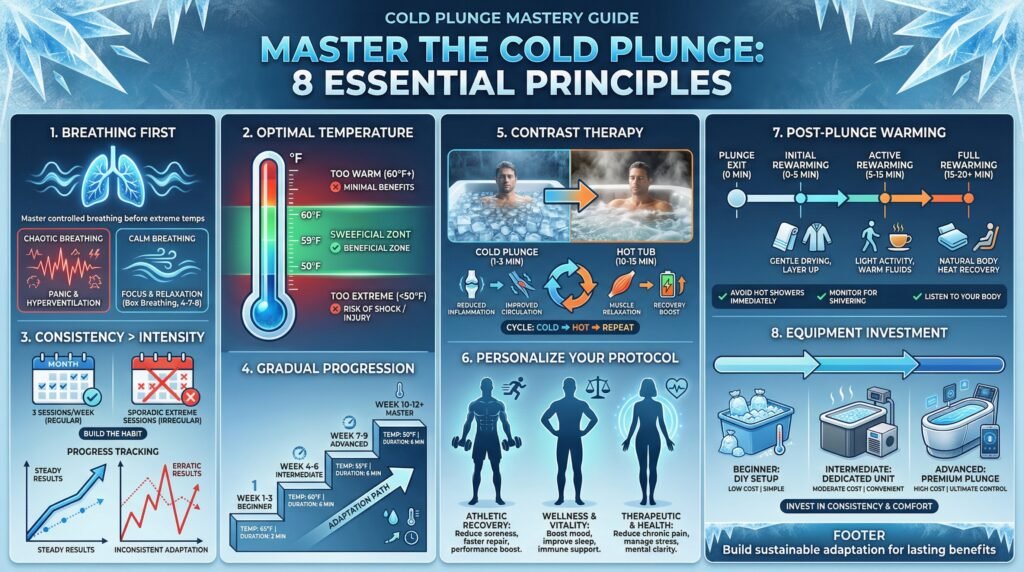
If you’re new to cold plunging, start at the warmer end, around 58-60 degrees. This lets you focus on your breathing and mindset without being overwhelmed by the cold. As you get used to it, lower the temperature by one or two degrees over time, just like you’d add weight in strength training.
If you have more experience, you can go down to 50-52 degrees, which is enough for most health goals. Going below 50 degrees usually doesn’t add much benefit and increases safety risks.
The exception might be very brief exposures of 30-60 seconds, but even then, the extra benefit compared to slightly warmer temperatures is minimal.
Breathing Technique Separates Good Sessions from Transformative Ones
Breathing is the most overlooked part of home cold plunging. Most people focus on temperature and time, but how you breathe during the plunge can make the difference between calming your nervous system and just feeling stressed.
When you first get into cold water, your body reacts with a gasp and fast breathing. This is a natural survival response, but it actually works against the benefits you want.
This fast breathing activates your stress system too much, making you feel anxious and making the plunge harder than it should be.
The solution is to control your breathing, starting before you get in. Take five to ten deep, slow breaths before you enter the water, filling and emptying your lungs each time.
This helps calm your nervous system and gives your body a buffer against the first shock of the cold.
As soon as you get in, start a steady breathing pattern. I’ve found that inhaling through your nose for four seconds and exhaling through your mouth for six seconds works very well.
The longer exhale activThe longer exhale helps activate your body’s calming system, which balances out the stress response.thing pattern throughout your session changes everything. Instead of fighting the cold with tension and shallow breathing, you’re essentially telling your body that you’re okay, that this is under control, that you can handle it.
Your heart rate stays steadier, you feel less cold, and you can stay in the water longer with better results.
This breathing turns the session into a kind of meditation. You focus on your breath, which quiets your mind and helps you stay present.
Many people say that the mental clarity and mood boost from cold plunging comes just as much from the breathing as from the cold itself.
Trying the Wim Hof Method or other structured breathing routines made for cold exposure can really boost your results. These methods use special breathing patterns before, during, and after your plunge to get the most physical and mental benefits.
Duration and Frequency: Finding Your Personal Sweet Spot
There’s a persistent myth in cold plunge communities that longer is always better: if three minutes is good, then ten must be three times as useful. This linear thinking doesn’t match the actual physiology.
Research suggests that total weekly cold exposure time matters more than session duration. Around 11 minutes per week of total cold exposure is a threshold at which meaningful benefits consistently appear.
How you distribute those eleven minutes across the week is surprisingly flexible.
You could do three sessions of 4 minutes each, four sessions of 3 minutes, or even seven sessions of 90 seconds. What matters is hitting that total exposure time while maintaining enough intensity and proper temperature to trigger adaptation.
For most home practitioners, three to four sessions per week of three to five minutes each provides an optimal balance. This frequency allows adequate recovery between sessions, makes the practice sustainable within a regular schedule, and delivers consistent benefits without excessive time investment.
Very short sessions of 30-60 seconds can work for beginners or for those using extremely cold temperatures below 50 degrees, but they need more frequent repetition to reach that eleven-minute weekly threshold. Extremely long sessions beyond ten minutes offer minimal extra benefit for most people and substantially increase the stress load on your system.
The timing of your sessions relative to other activities also matters significantly. If you’re using cold plunging primarily for athletic recovery, the optimal window is within 30-60 minutes post-exercise.
This timing maximizes anti-inflammatory effects and reduces delayed-onset muscle soreness most effectively.
For metabolic benefits, general wellness, or mental health applications, the timing is less critical. Many practitioners prefer morning sessions because the alertness and mood boost carry through the day, while others find evening sessions promote better sleep quality.
Experiment with timing and track how you feel to identify what works best for your physiology and goals.
Progressive Overload for Cold Adaptation
Just like strength training needs progressive overload to continue making gains, your cold plunge practice needs systematic progression to keep delivering benefits. Your body adapts to the stress you apply, so what felt intensely challenging in week one becomes manageable by week six.
The progression variables you can manipulate include temperature, duration, and movement within the water. Starting with warmer temperatures and shorter durations, then gradually decreasing temperature and extending time over weeks and months, provides a structured path for continuous adaptation.
Most people can handle a 1-degree decrease in temperature every 1 to 2 weeks without excessive discomfort. Simultaneously, you can add 15-30 seconds to your session duration weekly.
This gradual progression keeps the stimulus challenging enough to drive adaptation without becoming so tricky that you dread your sessions and compromise consistency.
An often-overlooked progression technique involves movement during immersion. When you stay completely still, a thin layer of warmer water forms around your skin, providing some insulation.
By slowly moving your arms, legs, and torso, you disrupt this thermal layer, intensifying the cold exposure without lowering the water temperature.
This movement-based progression is brilliant for home setups where precise temperature control is difficult. You can make a 55-degree session feel significantly colder by incorporating deliberate movement, essentially increasing the training stimulus without the logistical challenges of adding more ice or dealing with colder temperatures.
Common Mistakes That Sabotage Your Results
After observing countless home cold plunge practitioners, I’ve noticed several patterns that consistently limit results. Most of them are easily correctable once you’re aware of them.
The first major mistake is starting too cold, too fast. There’s this weird machismo around cold plunging, where people feel compelled to jump into extremely cold water right away to prove their toughness.
This approach backfires because it creates such an overwhelming stress response that you can’t maintain proper breathing technique, and it often leads to negative psychological associations with cold exposure that undermine long-term consistency.
You’ll get better results starting at more moderate temperatures, where you can focus on breathing and building positive associations, then progressively decreasing temperature as your tolerance builds. This patient approach creates a sustainable practice, rather than boom-and-bust cycles where you push too hard, burn out, stop for weeks, then try to start over.
The second mistake is inconsistent practice. Sporadic cold exposure once every week or two provides minimal adaptation.
Your body needs regular, repeated stimulus to develop the physiological changes that create lasting benefits.
Three consistent sessions weekly at moderate intensity outperform one weekly session at extreme intensity by a massive margin.
Building cold plunging into your routine as a non-negotiable practice, like brushing your teeth or having morning coffee, eliminates the daily decision-making that leads to skipped sessions. Schedule specific times, prepare your setup in advance, and treat it as seriously as any other health practice you value.
The third mistake is neglecting post-plunge warming. How you warm up after cold exposure significantly impacts both safety and the overall therapeutic effect.
Jumping into a hot shower immediately after cold plunging creates a massive cardiovascular stress as your body rapidly shifts from extreme vasoconstriction to vasodilation.
Instead, allow gradual, natural rewarming. Put on warm, dry clothes, sip warm tea, move around gently, and let your body regulate its temperature over 15-20 minutes.
This controlled rewarming extends the metabolic boost from cold exposure and reduces unnecessary stress on your cardiovascular system.
The fourth mistake is ignoring person variation in cold tolerance. Your optimal protocol might look very different from someone else’s, depending on factors such as age, body composition, fitness level, underlying health conditions, and genetic variation in cold-adaptation capacity.
Pay attention to how your body responds across multiple sessions. Are you experiencing suitable flushing and feeling energized afterward, or are you feeling depleted and having trouble warming up?
Is your sleep quality improving or deteriorating?
Is your mood lifting or becoming more anxious?
These subjective markers guide your optimization process. If you’re consistently feeling worse after sessions despite following standard protocols, you might need warmer temperatures, shorter durations, or lower frequency.
Conversely, if sessions feel too easy and you’re not seeing benefits, you should increase the challenge.
Personalizing Your Practice for Specific Health Goals
Your optimal cold plunge protocol should align with your specific health goals. There’s some research supporting different approaches for different goals.
For athletic recovery and reduced muscle soreness, the evidence supports cold exposure within 30-60 minutes post-exercise, at temperatures around 50-59 degrees, and for 10-15 minutes. This timing and exposure maximize anti-inflammatory effects that reduce delayed-onset muscle soreness without significantly impairing the muscle protein synthesis needed for adaptation.
For metabolic enhancement and potential fat loss benefits, the focus shifts to activating brown adipose tissue through regular cold exposure. This responds best to consistent practice, three to four times weekly at temperatures cold enough to cause shivering but not so cold that you can’t maintain it for several minutes.
The shivering response shows significant brown fat activation.
For mental health benefits, particularly mood enhancement and anxiety reduction, the emphasis is on the acute norepinephrine release and the psychological resilience built through voluntary discomfort. Shorter, more frequent sessions can work well here.
Even daily cold exposure of one to three minutes can provide meaningful mental health benefits.
For immune system modulation, one of the most researched benefits of cold exposure, regular practice over months seems to yield the most significant effects. Studies showing reduced sick days and improved immune markers typically involve consistent cold exposure three to seven times weekly for at least several weeks.
Understanding which benefits you’re primarily seeking allows you to structure your temperature, duration, timing, and frequency to maximize those specific outcomes. You’re strategically applying cold stress to achieve particular health goals, rather than randomly exposing yourself to cold in the hope of benefits.
Equipment Considerations for Long-Term Practice
While you can absolutely start your cold plunge practice with DIY methods using bathtubs, stock tanks, or chest freezers, the limitations of these approaches become increasingly apparent as your practice matures.
The primary challenge with DIY setups is temperature control. Maintaining consistent temperatures requires constant ice additions and continuous temperature monitoring throughout sessions, due to significant temperature drift. This inconsistency makes it difficult to systematically apply progressive overload, because you’re never quite sure which stimulus you’re actually using.
Dedicated cold plunge equipment solves these issues through integrated cooling systems that maintain precise temperatures automatically, built-in filtration that keeps water clean between sessions, and often smartphone connectivity that lets you log sessions and track your practice over time.
The investment is substantial, typically ranging from 3,000 to 10,000 dollars, depending on features and capacity. Still, for serious practitioners planning years of consistent use, the convenience and enhanced results often justify the cost. Many people find that having dedicated equipment dramatically improves their consistency simply because the friction of setting up and breaking down DIY systems disappears.
When evaluating equipment, prioritize temperature control precision, filtration quality, and insulation effectiveness, as these factors affect operating costs and warranty coverage. Some systems include integrated heating for contrast therapy, which adds significant value if that’s part of your practice.
Frequently Asked Questions
What temperature should my cold plunge be set to?
The optimal temperature range for most people is 50-59 degrees Fahrenheit. This range provides enough cold stimulus to trigger beneficial adaptations without creating excessive stress or safety risks.
Beginners should start at the warmer end, around 58-60 degrees, while more experienced practitioners can work down to 50-52 degrees as their tolerance builds.
How long should I stay in a cold plunge?
Most people benefit from sessions lasting three to five minutes, repeated three to four times per week for a total of around eleven minutes of weekly cold exposure. Beginners might start with shorter sessions of one to two minutes and gradually build up duration over several weeks as their adaptation improves.
Should I do a cold plunge before or after a workout?
For most recovery benefits and reduced muscle soreness, a cold plunge within 30-60 minutes after your workout. However, be aware that cold exposure immediately after strength training might slightly impair muscle protein synthesis and long-term strength gains.
For general health benefits unrelated to workout recovery, timing is less critical.
Can I do a cold plunge every day?
Yes, daily cold plunge sessions are safe for most people, as long as the sessions are relatively short, around one to three minutes. Many practitioners find that daily exposure of shorter duration provides excellent mental health benefits.
Listen to your body and reduce frequency if you experience persistent fatigue or difficulty warming up after sessions.
How do I breathe during a cold plunge?
Start with five to ten deep breaths before entering the water. Once immersed, establish a controlled breathing pattern such as a four-second inhale through your nose followed by a six-second exhale through your mouth.
The longer exhale activates your parasympathetic nervous system and helps you stay calm during the session.
Does a cold plunge help burn fat?
Cold exposure activates brown adipose tissue, which burns calories to generate heat. Regular cold plunging, primarily at temperatures cold enough to cause shivering, may provide modest metabolic benefits and support fat loss when combined with proper diet and exercise.
However, cold plunging alone should not be considered a primary fat loss strategy.
Can a cold plunge improve the immune system?
Research shows that regular cold exposure can enhance specific immune system markers and may reduce the frequency of upper respiratory infections. Studies typically show benefits with consistent practice over several months, three to seven sessions per week.
The immune benefits develop gradually through repeated exposure rather than from occasional cold plunging.
Why do I feel anxious after a cold plunge?
If you feel anxious after cold plunging, you may be using water that’s too cold, staying in too long, or hyperventilating during the session. Focus on controlled breathing throughout your session, consider using slightly warmer water, and reduce your session duration.
Post-plunge anxiety often shows excessive stress response as opposed to beneficial hormetic stress.